Wednesday, April 30, 2008

Women Getting Nippple Periced

Japan and Frida and Frida


This is a difficult entry to write. Not because I do not like Frida Kahlo (1907-1954), but because I love all his work, so I do not know which to choose (what the French call "l'embarrass du choix").
Frida is complex, simple, interesting, exciting, personal, universal. His work reflects his life, his pain (caused by a bus accident that left him battered spine), its turbulent marriage to artist Diego Rivera, her communist ideals, his ideals on women, its dual tradition (European-Indian).

The work that I want to show today, The two Fridas , was painted in 1939 (now in the Museum of Modern Art in Mexico). In it we see the duality of Frida. On the one hand there is the Frida dressed in white, European, with that kind of Angola that covers the entire neck. On the other hand, the indigenous Frida, dressed in the Mexican, with a medallion bearing the image of her husband, Diego Rivera, in his hand.
work is a haunting, surreal. The European Frida takes a delicate silver scissors with which you have cut part of your veins (perhaps mention its many abortions? Or her husband's infidelities, among others, with her sister Cristina?). However, despite this double culture, the two Fridas are joined heart to heart by these disturbing veins running down his neck and curled in his arms. One of them, leaving the heart, it seems a hand he wants to stroke his face. The two Fridas are just one. Together by the hands and the blood.

In my opinion, one of the best expressions of the dual nature of many latinoamerican.
Frida Kahlo
promise more soon. Meanwhile, I recommend the Taschen book devoted to Frida Kahlo is very interesting, very well written, the pictures are in color and also found in any library (or in any bookstore at a great price). Seize the next Book Fair. It is a wonderful gift.

The full reference is: Andrea Kettenman, Kahlo (Taschen, 1999).

Tuesday, April 29, 2008

Peace Symbol Bathroom Sets

Roth and human stain red hat


Philip Roth is a genius. And it is the best living American writer.

So I decided to start my review after reading "The Human Stain," published in 1998, in the Clinton-Lewinsky scandal (remember?).
The protagonist, Coleman Silk, is a seventy-year-old Latin teacher Greek makes a silly comment about two students that are not in class. These are black and the joke is taken by his enemies as racist behavior. Silk has to leave the university. And everything changes ...
not want to reveal much of the work. It seems to me essential that the reader discovers the secret Silk gradually, as proposed by Roth. I want to say yes, some characters:
-Faunia, illiterate cleaner with whom Silk has relations. Is a complex character, very interesting. I love how it makes Roth get us into his mind. The concept of The Human Stain is it.
-Delphine Roux. A perfect caricature of French academia. Roth is ruthless with her in a few pages. Of course, recording, and the reader wants to know more.
- Les. Ugh. I never got well into the skin of a soldier in Vietnam, but one who wanted to return. It's scary to think how some people have so aggressively that war is a way to take it out. And how war destroys people.

"The Human Stain" is part of what Roth calls his trilogy on American history of the twentieth century, along with "American Pastoral" and "I Married a Communist." I have not read the first, but "The Human Stain" is better than the second, without hesitation.

"You can not allow large will impose their intolerance, the same way that you can not let the little ones become an us and we will impose its ethics "(page 141).

I said, fundamental and exciting reading. On the issue of race, morality, Puritanism, life. Hook up the point that I finished the book days and little else. I could not let go.


on Roth and his life, you can check the previous blog entry, here .
Maba Thanks to the star! put it here for everyone.

Friday, April 25, 2008

Gloryholes In Columbus,oh


Jenny Joseph (born 1932) is an English poet. His best known poem seems to me a beautiful ode to eccentricity at any age.


WARNING When an older woman in purple dress
me with a red hat that does not stick, and I do not fit.
And spend my pension on brandy and summer gloves
and satin sandals, and say that I can not afford butter.

I'll sit on the sidewalk when I'm tired and gobble
samples in shops and apretaré alarm buttons.
And spend my cane for the rails.
And make it up the sobriety of my youth.

'll go out to the street in slippers in the rain
and gather flowers in the gardens of others.
And learn to spit.

can wear terrible shirts and get fat, and eat three
pounds of sausages at once.
Or only bread and pickles for the entire week.
and storing pens and pencils and beer mats and things in boxes.

But now we must have clothes that keep us dry,
and pay rent and not swear in the street.
And be a good example for children.
We must have friends to dinner and read the newspapers.

But perhaps you should practice a little now?
So people who know me do not be surprised or amazed, when suddenly
is older and start to wear purple.


Jenny Joseph (my translation)

You can find the original poem here .

This poem inspired the creation of the Red Hat Society in the U.S. with the aim of inspiring the eccentricity, imagination, fun, friendship and social networks of women over 50 years. Even Marge Simpson, in a chapter, he became a member of this club, whose hallmark is exactly the red hat:

What do you think? Should we all buy a red hat and ipso facto started?

Thursday, April 24, 2008

Nadine Jansen Blowdry

A Color, pure color (and nothing else). Or not? Guest Commentator


Mark Rothko (1903-1970), one of the leading painters of abstract impressionism. I always hated that his paintings were chosen by the decorators by the color of their couches. His paintings usually measure about two meters. It is a flood of color.

Wednesday, April 23, 2008

Free Indian Frequenzy


Today is the day the book. Or rather, the day we celebrate that we buy books. Every time I'm more skeptical about these "day." The day the book is the day you read books (if you're a biblioadicta, every day).

Today I want to make this blog a new section: the guest commentator. Once a month, I'd like one of the readers of this blog (some, writers of other blogs) to do the entry, thus providing a new point of view. You can talk about whatever you want.

To inaugurate I thought Rachel, a good friend (digital and outside the internet) which, as you have seen, is one of the first to comment all the entries. Rachel, avid reader, like me, has decided to share with us the review of a book (great, I'd say).

From now on, the blog is all yours. Thank you for participating, Raquel.

The hand of good fortune, Goran Petrović

opened the "guest commentator" talking about a book.

Why this book? Because I found it very special, because Goran Petrović is a great unknown in our country. Not in Serbia, where this novel won the NIN, the largest Serb recognition of letters.

The novel, heiress of magical realism, is a marvel. It is a novel that is read only, but is able to transport you to a literary world full of smells, tastes, textures and sounds wonderful. In this world the characters are the books and we, the readers.

From what I've seen is hard to find this author translated into English, and only the Sixth Floor editorial makes us accessible.

If ever reaches your hands this book, by accidents of life or of fate, Do not miss the chance to step into your pages. You will not regret.

Book Summary:
The Hand of Good Fortune is that, a place where all who approach him, they discover that the cold reality that can not provide: the warm feeling of existence. With this book, Goran Petrović achieved what rarely gets: sculpt a more perfect piece of living literature called Absolute. The hand of good fortune recounts different love stories that revolve around a very peculiar book, My Legacy, by Anastas Branica. At first glance this is a book where there is no plot, no characters, just descriptions. However, that's what makes it a self-sufficient space in a world that can only be inhabited by his readers, the only real players. Anastas wrote the book to live in his beloved, because reality does not stop being a pale sketch of what truly represents my legacy. From what Petrović called simultaneous reading, you may agree with others in the same book, and not only that, but also to live what is beyond the simply written. What else can we describe what happens to us when we read with real conviction, when books become alive, palpable, manifest, when the books become part of our physiology, when love is embodied in the two unknown reading carried out time, waiting time is abolished by the mere fact of setting his sights on a page. In short, what the reader of this book will surely experience, together with all other readers that match it will be a state of joyful amazement (abstract editorial)


Tuesday, April 22, 2008

Eye Laser Cost Malaysia

The importance of a point.

Today, another article I can not help sharing with you. The Spelling and grammar are very important, as you read. Never forget the accents in the mobile phone:

"The point of the letter" i "causes a family tragedy in Ankara

A misunderstanding between a former partner at the lack of appropriate characters in the Turkish alphabet mobile phones leads to a murder and a suicide

The marriage of Ramazan Çalçoban Emine and decided to break off their relationship after a fight. Emine, 20, returned to the house of his father, Hamdi Pulas. The couple, however, fight stopped after separation and disputes continued through messages on their mobile phones.

Ramazan, 24, berated him one day to his ex-wife who always changed the subject when he was no argument. But in many mobile phone keypads there is no basis for the letter "I" Turkish (i closed, which is written without a period), so Ramazan, instead of typing "sIkIsInca" (when you run out of arguments), he "sikisinca" (when you screw), says the Turkish newspaper Hürriyet . Emine

took the message as an insult and showed it to his father, as contained in the report of the judicial inquiry into the case. The father was furious and lashed out at his former son: "You have insulted has sullied our honor. You're treating my daughter like a prostitute. "

Ramazan went home when his ex-wife and her former stepfather explained Pulas whole family jumped on him and wounded him with a knife. In retaliation, Ramazan stabbed to Emine to death and was jailed for it, but committed suicide in prison.

Now the prosecutor requires a sentence of 15 years in prison for Hamdi Pulas and two of his daughters for the "attempted murder" of Ramazan.

The tragic story was published yesterday Hürriyet, which stands out in your information to the point of "i" in certain words of the Turkish language is causing "serious problems" in the country. "

From" The Country .

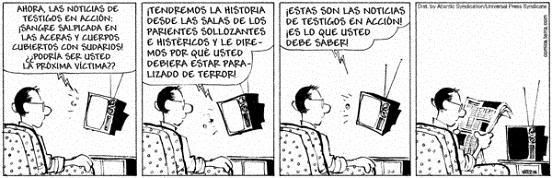
And for that not everything is so gloomy, a strip of Calvin and Hobbes. You know I love it.


"Test: When Pilgrims arrived (early settlers of the USA) to Plymouth Rock?
1620.
As you can see, I've memorized this utterly useless fact long enough to answer the response of this test. Now I have the intention to forget forever. There has taught me anything, except how to cynically manipulate the system. Congratulations.
say that the satisfaction of teaching outweighs the lousy pay. "

Friday, April 18, 2008

Cost To Remove Wart From Dog

The evacuation of the masterpieces


Today I write not. I wanted to share with you / you this article that appeared today in "El País". Can you imagine the arrival of the train to Geneva? Or the Goyas hidden in a salt mine? The next time you visit / visited El Prado, see the works with other eyes, thinking of his journey. Impress me much this picture of police with his pistol in hand, and the Sagrada Familia del Greco at his side.

Feature: Masterpieces in exile

And Prado fielded his fate

trip Reconstruction

the art treasures in the Civil War began


November 16, 1936. The Junkers German Condor Legion baited with Madrid. The bombs hit the Prado Museum. The president, Manuel Azana, decides it's time to complete the evacuation of works tentatively begun under the leadership of Rafael Alberti. There may be more republics or even return the monarchy, but a treasure like this there is only one. A few days later begins the long journey that would end with the arrival in Geneva in February 1939 of more than 20,000 works of art.

This wonderful adventure, which included involuntary actors of the stature of Rembrandt, Velazquez, Goya, Titian and Rubens could have been written by the best writer the most intractable thriller.

Despite having been almost seventy years of this, what happened to the funds of the Prado during the war has been poorly treated by historians. As in a strange conspiracy of silence of all parties involved. Until now. The historian Arthur Castellary Colorado (Huelva, 1950) reconstructs the story in Exodus and Exile art. The odyssey of the Prado Museum Civil War (Chair), while a documentary, Save the Prado, Alfonso by Arteseros, added light on the period with the testimony of witnesses and protagonists of the adventure.

The story certainly has all the ingredients. A total of 71 trucks moved to Valencia the jewels of the Prado (which joined other de El Escorial, the Academy of San Fernando, the Royal Palace and the Palace of Liria). From there to Barcelona. And Figueras. Finally, the treasure was safely on the other side of the border along with thousands of English frozen by the cold and confused with hunger in 1939, in that merciless winter exile.

The fate of the pictures ran parallel to the Government of the Republic II. And he was always under the direct control of the president. "Below our room was the Velazquez" writes Azaña in Peralada Castle and in the final days of the fall of the Catalan Republican. "Every time I bombed near despair. I feared that my destiny had brought me to see the museum made a bonfire. It was more than they could bear. "

It had actually begun in August 1936, when the Museo del Prado had to close their doors. The most important works were taken down. Covered with blankets and plastic, occupied the bottom the building, along with other seized by the Board of Seizure and Protection of Artistic Patrimony, who presided Timoteo Pérez Rubio, the protagonist also unexpected rescue operation of the museum.

Alfonso Perez Sanchez, who was director of the Prado for eight years is question in the preface of the book on the need for eye surgery with the benefit of hindsight. His answer is blunt. The bombs dropped on the palace of Villanueva in the first days of war and to justify the decision. Although it had to be in the midst of an environment that discouraged. And against the fascist propaganda that spread the idea that if the pictures came out would be exchanged for weapons. Sánchez Pérez concludes that trip was not only necessary, but all the English have a moral debt owed to those responsible for the operation.

The weak output of the first works, organized by Alberti, continued with the maximum guarantee possible between April and May 1937. Pumps Prado reached in November 1936 had sounded a resounding ultimatum. The carrier was commissioned Macaroni packing thousands of pieces of cardboard coated waterproof and packed aboard trucks traveling at 15 kilometers per hour.

In Valencia, the works are installed in the Torres de Serrano, a veritable fortress. In late 1937, the national troops advancing force to a new transfer. The government moves to Barcelona and decided that the caravan Azaña artistic accompany you to Catalonia. Peralada Castle, 10 kilometers from the border, and the talc mine Vajol are the last hiding places for treasure.

February 1939. Catalonia is about to fall to the forces of the Legion. Output should be organized under the protection of democratic countries. The Catalan painter Jose Maria Sert gets it. On February 2 the agreement is signed Figueras. In France, the works are transported by train. When, after its entry into Geneva on February 13, 1939, workers who opened the 572 boxes of treasure, guarded in the palace of the League of Nations, breathed a sigh of relief. The 45 Velazquez, 138 goyas, Greco 43 were still there with the rest of the treasure.


Shortly after the war began, the Government of the Republic appointed the Valencian painter and poster artist Josep Renau Director of Fine Arts. In front of the Museo del Prado placed a now famous Pablo Picasso. Alberti was in charge of the Romantic Museum. But the real protagonist of this story was the painter Timoteo Pérez Rubio, elected to chair the Board of Seizure and Protection of Artistic Patrimony. Of the three appointments, the latter was, in fact, the most important. Renau action was important during the period in which the works were in Valencia, but the relationship between Picasso and the museum was nonexistent. From Paris encouraged Pérez Rubio to use his name as security for international efforts would be undertaken. "You can see that we are friends since childhood. O brothers. Whatever you want. Use me for what I consider necessary."

Pérez Rubio, married to writer Rosa Chacel, was preparing to leave summer when war broke out. A car drove towards the mountains to rent a room at The Paular. I was looking for new landscapes. They intercepted the pass. The war had broken out. Pérez Rubio, without political affiliation, offered to do anything. Without it, the long journey of Prado would not have been possible. As his wife, Rosa Chacel, "waged war to defend the artistic treasure English. "Taken literally

The Country .

If anyone knows when will be missed by television documentaries, to inform us, of course.


Thursday, April 17, 2008

Ford Fiesta Ipod No Sound

Marina and jealousy and a story

( Edited: information below)

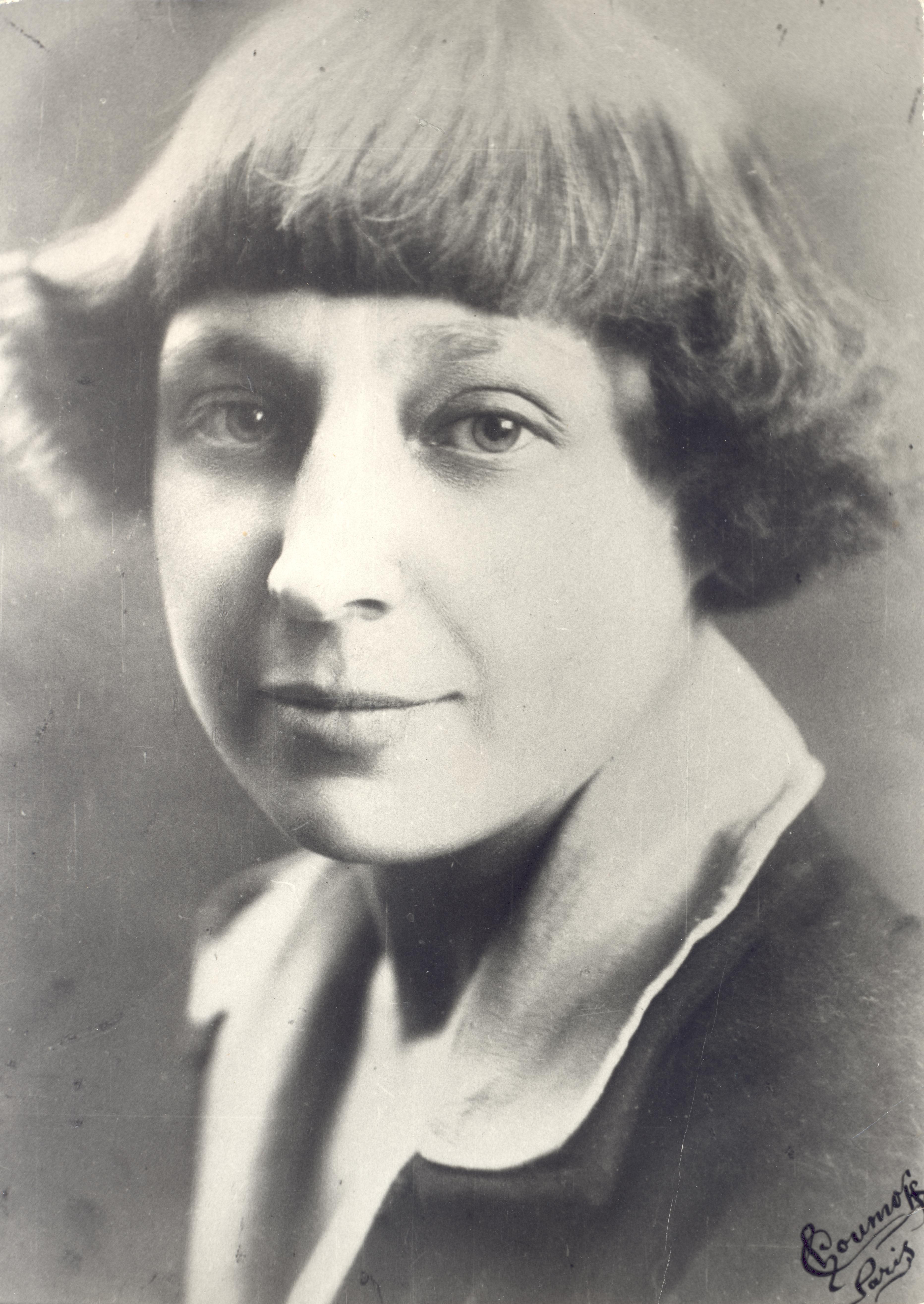
Tsvietáieva Marina (1892-1941) was a Russian writer of poetry, probably the most original of the twentieth century. His poems speak of women's sexuality and emotions.

Marina witnessed first hand the Russian Revolution of 1917. Her husband fought with the White Army against Bolsheviks. In 1919 he gave his daughter Irina to an orphanage, thinking that there would be better fed, and that was a year of great famine. However, the girl died of hunger there a year later. Marina never forgive herself.

In 1922 he went into exile, first to Berlin and Prague, then to Paris. The same route was, for example, the Nabokov family and much of the Russian intelligentsia. In 1939 he returned to Russia, however, any person who was living abroad was considered a suspect, and the Navy found no way to publish his poems. In 1941, desperate, committed suicide. There were people who said that the NKVD (the predecessor of the KGB) had to do with his suicide, but never confirmed. They also say he hanged himself with the rope he had used during his exile to close their bags.

totally forgotten, his poetry will only be recognized from the 60's.

Today I wanted to present a poem angry and sentimental. To see what you think the voice of Marina. Attempted

jealousy

What are you doing with another?
Is it easier, perhaps?
A single stroke of oars,
and walked away.
How quickly runs out

memories of the floating island, the navigator

sky!

Oh, souls, souls!

I get to be sisters, not lovers.

How about you live with a single woman?
"Without gods?
Having dethroned the sovereign

(degrade her you), how is

in the daily grind? Dividend Yield


"devotion to the sovereign
banality?
"Stop twitching,
Enough suspense!

A house I'm renting."

And what lives there
the first that fell
-answer me you

which was chosen for me,?
Is it a more substantial food
more palatable?

But tired,
will not be sorry ...

how you are doing with your drill, oh
apostate from Sinai?
What are you doing with the strange,
with the most here? Why
be his rib, the soul?
Shame, punishment of Zeus,

forehead you still has not hit?

How are you? Health, how goes? What

sung and breathe?
And how do you defend the sore

of the immortal consciousness,
poor?

What are you doing with the current
merchandise? Is not
high tax?
"After the Carrara marble, which may

plaster dust?
(From a mole
first carved a god, but then it collapsed
and destroy it!)

What is going
a heap,
with the brush, you
, which won Lilit
know?

new market Is not yet bored
? Having ruled

spells,
how about a woman going
normal
no sixth sense?

Let's see, bluntly
are you happy?
right? In a ditch without
depth How we live,
dear? More difficult,
or equal than me

another?

Tatiana version Bubnov

Published:
a reader of this blog (thank you, the other!) Alerts us that asteroid has published the third novel by Nancy Mitford in Castilian, Blessing. The cover photo, above right. It looks pretty good, all in their line. I leave you with the summary:

When Sigi Grace and her son finally achieved after the separation caused by war, together with her illustrious husband, Charles-Edouard, and settle in France, not only Nanny has difficulty adapting to the customs of the new country. Grace loses foot to the very elegant French women, and is surprised by a world of gossip, love affairs and complicated. But the surprises do not stop there, later discover that her husband has a tendency to pursue any woman attractive crosses their path. Everything makes him think his marriage is nearing completion and it's probably time to return to England, that is when the "blessing", the little Sigi, one of the most accomplished of the author, take matters into .
With his characteristic ability for satire admirably reconstructs Nancy Mitford environment, life and people in the aristocratic circles of Paris and London. Beyond sophisticated characters, fun plots and the hectic pace of a scathing dialogues, the blessing is also, like other works of its author, the evocation of a vanished world.

Indeed, the editorial "In pocket" has published the first two novels to which asteroid half price. Advice for those with a limited budget (if not, there are always libraries):

Monday, April 14, 2008

Jet Ski License Online

Calvin

Calvin and art (in English):


And today I wanted to introduce one of my minicuentos. Hope you like it. Of course, it supports all kinds of criticism.

's time to wake up together

"It's time to wake up together."

The prince looked deep into the eyes of the princess as she said those words. She nodded, courageous. Every night they slept together while they slept, they moved to eunuchs strongmen different rooms. That was the immutable law to the heirs of the Persian royal house, established since before the Prophet Muhammad.

went to bed that night as usual, holding his hand before falling asleep. The eunuchs came quietly but found no one. The princes had managed to wake up and fled. They ran through the gardens, laughing and enjoying the night together. Smell the perfume of roses night and lost in the vast domain of the king.

am The birds began to sing and looked at the two princes, who had been sleeping on a bench. The princess was awakened by the first rays of sun and thanking Allah that time, kissed the lips of her husband, who opened his eyes. The smile froze on his lips: he knew now why the law banning the heir to wake up with a person next. He could not say a word before the prince, transformed into a bear terrible, would open the throat of a coup.


Cheat Engine Chiken Invaders

A boy and his tiger


Today I want to introduce (Who do not know it) the best comics of the twentieth century Calvin and Hobbes by Bill Watterson. Waterson published "Calvin and Hobbes" for 10 years (1985-1995), breaking with the structure and themes that are used to treat this type of comic. Calvin and Hobbes have talked about politics, art (lots of art criticism), life and made a lot of nonsense. I hope one day Watterson's resume.

Calvin is a child of six years, almost hyperactive, with much imagination and hates school. Hobbes is ... his alter ego, his stuffed tiger, only for him, is alive. His philosophical part.
Other players: Calvin's father (He hates technology), her mother and her friend Susie (which is a little love).

sound you may not: among other reasons because Watterson refused to sell the character completely. Despite the millions sums were offered, there is not cuddly or mugs, shirts or even film (Steven Spielberg wanted to direct). I admire his courage to resist so much money.

Today I leave just two examples, one poetic, the other a solution to a situation more and more everyday. More will appear. Enjoy.

Friday, April 11, 2008

Cydia Hacking Soursec 2010

floating in the river ...

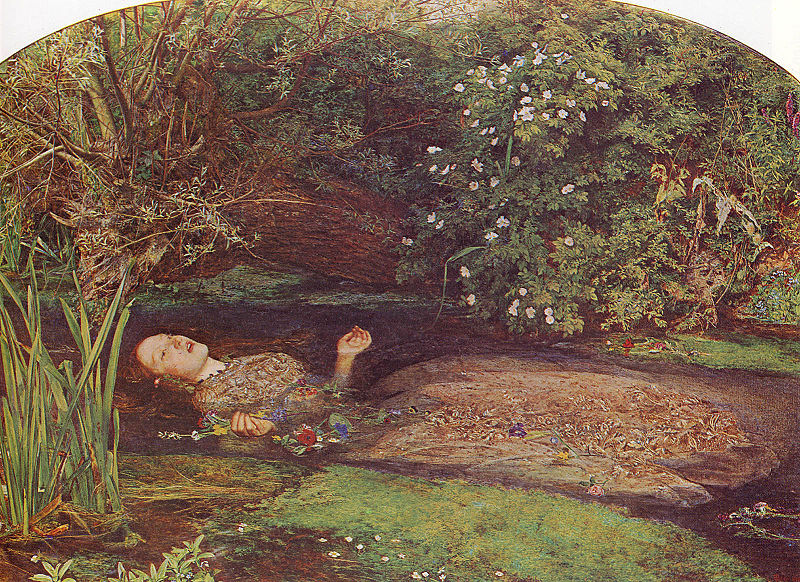
Ophelia is one of the most tragic Hamlet. He loses his head (or not), but she is in front of his wall of incomprehension. "Thee to a nunnery!" He snapped. And poor Ophelia does not know what happened, because before it seemed that he loved her.
Then she loses her head, and rightly so. Hamlet kills her father, Polonius. And she walks around with flowers in hand. And disappears. Queen Gertrude says, shortly after that climbed a tree, fell into a river and drowned. In this way, we never know if she committed suicide.

Millais painted this picture in 1852. The picture can be seen in the Tate Britain (London), now in the magnificent exhibition on the painter Van Gogh Museum is in Amsterdam. Millais paid great attention to the flowers surrounding the beautiful Ophelia, as painted rather than the model. If you stretch professional picture, you can see the great detail of these and their symbols. As the poppies that surround it, meaning the opium and therefore eternal sleep.
do not know whether Ofelia is already dead in this picture or not, or still floating in the river peacefully. The model in this picture, Elizabeth Siddal, and spent long hours in a bath heated by lamps that Millais painted it. Anecdotally, it appears that caught a bad cold.

The picture is superb, and the fate of poor Ophelia, a doll in a world that rejects or ignores it, very sad.

Wednesday, April 9, 2008

Putting Wheels On Subs

When libraries are not alone ...

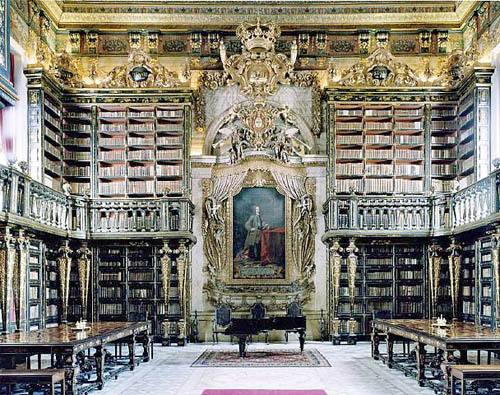
Today I want to show on the blog of the work of German photographer Candida Höfer, photographing empty buildings. One of his favorite topics: libraries. Höfer has walked across Europe and the U.S. side, taking photos of these containers of books when they are deprived of users, when the books are alone and can breathe easily. The pictures are eerily beautiful, poetic and peaceful.


The book is published in Spain, but you can find easily. And, as is a book of photographs, the text is not important. A perfect gift for a bibliophile.


Tuesday, April 8, 2008

Disadvantages Of Object Relational Database

gas light

blog I've decided to extend this movie, but really, the good, which endures and will endure.

confess I have a special fondness for the film in black and white. Perhaps because a good part of the films in these two colors, combine good scripts, good actors, good direction, and lead to great movies.

Today: Gaslight ( Gaslight ), but the version of 1944, with Ingrid Bergman and Charles Boyer.

The story begins with a very young Bergman that part for Italy. Ten years later, there falls a pianist, Charles Boyer, with whom he marries and who returns to London at the house where he lived with his aunt until she was brutally strangled. Ingrid begin to hear strange noises and memory loss, forgetting where you left things. Her husband convinced he's losing his head.
Is there anything else or is it just the madness that is manifesting?


An earlier version of this film, shot in 1940. The differences between this and the 1944 is that the former focuses more on the plot, whereas the 1944, which I have seen, is much more psychological.

I do not want to say anything, even what is known from the beginning, it would take grace to the movie. The script keeps you stuck in the chair until the end, especially as a empathizes more with Bergman. The performances are great: Ingrid overboard and hence it took the Oscar. And even have the privilege to see Angela Lansbury (yes, the detective of "The Murder, She Wrote") in his first role as a sassy maid, with only 17.

The film was lifted in 1944 with the Oscar for best art direction of black and white, and rightly so: the lighting is beautiful. The gas light and shadows play an important part in the film and even tell us the mood of the characters.

I said: a classic highly recommendable, very intriguing, good script and great actors. Available on DVD (libraries, shopping) and other support groups that I will not mention. Ahem.

amazing to consider that the U.S. is rolling these wonders in the world war, with people dying in front and in the concentration camps. I thank PD

Miu which granted an award for this blog. Thank you very much. I looked at the rules, and almost all the blogs I read have already won, so what I extend to everyone.